MXL 3000 Reviews: See Why 0 Shoppers Rated It 0 Stars!
Curious about the MXL 3000 microphone? Before you commit, see what 0 musicians thought about these MXL microphones — from real-world use to surprise letdowns.
 Supermod
  Moderator
 Recaptor
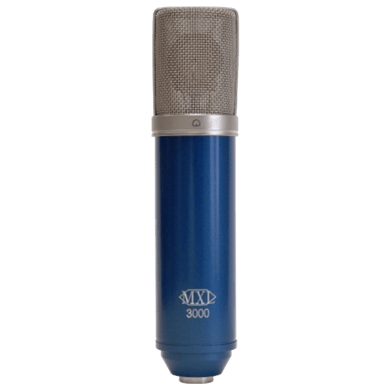
 MXL 3000 Microphone Review: A Studio-Grade Condenser Built for Precision and Versatility
The MXL 3000 is a noteworthy entry in the realm of condenser microphones, designed primarily for the professional and intermediate audio enthusiast seeking a reliable, versatile recording solution. Released at the turn of the millennium, this microphone continues to command attention due to its durable design and broad application scope, ranging from studio vocals to instrument tracking.
Based on its engineering data, it boasts a diverse range of capabilities that reflect high-grade standards suitable for controlled recording environments. But does the MXL 3000 truly live up to these specifications, and how well does it serve its target users in real-world settings?
Detailed Specs & Features
On paper, the MXL 3000 stands as a condenser microphone characterized by a large diaphragm capsule measuring 32 mm in diameter. This is significant because a larger capsule diameter often correlates with superior sensitivity and a richer, fuller sound capture, which is essential for studio-quality recordings. The microphone operates with a wide frequency response that spans from 20 Hz to 20,000 Hz; effectively encompassing the range of audible sound, thus promising a balanced reproduction of lows, mids, and highs.
Its polar pattern versatility allows users to switch between cardioid, omnidirectional, and figure-8 modes, which makes it adaptable for different recording situations and environments. This multi-pattern switching capability is a major value-add for studio engineers and producers who require flexibility in microphone behavior.
Connectivity-wise, the MXL 3000 relies on the classic XLR interface, the gold standard for professional audio connections, ensuring minimal signal degradation and compatibility with widely used mixers and audio interfaces. The product depends on a 48V phantom power, which is standard for condenser microphones but requires compatible equipment to operate correctly.
Other notable specifications include a sensitivity rating of -37 dB and a signal-to-noise ratio of 77 dB, which together suggest the microphone can deliver clear audio with relatively low background noise. The microphone's transformerless design also indicates a cleaner, more accurate sound capture by avoiding coloration sometimes caused by transformers. Despite lacking active gain control or onboard EQ settings, the MXL 3000 employs a studio-grade internal preamp, assuring high fidelity.
Design & Build
The MXL 3000 sports a metal body finished in matte gold, combining aesthetics with rugged durability. This means it should hold up well under typical studio handling and minor transit stresses. The microphone's 8.5-inch height and lightweight 3.96-ounce build strike a fine balance between sturdy construction and manageable portability.
It also features a swivel pivot capability with a detachable mount, which helps users position the mic precisely without compromising stability. However, it lacks integrated shock mounts, pop filters, or internal shock absorption; its foam dampening inside aids somewhat in minimizing vibrations and handling noise.
Performance
Performance-wise, the MXL 3000 promises maximum sound pressure level handling of 130 dB, making it suitable for loud sources without distortion. The microphone's fast transient response indicates that it can accurately capture sound dynamics, which is essential for voices and instruments that have sharp attack characteristics. With a relatively low equivalent noise level of 14 dB, recordings are expected to be clean, but not the quietest in the class; an important consideration in very low-volume or ultra-quiet environments.
Its multi-pattern switching is precise, although stepped rather than continuously variable, enabling reliable changes in directional characteristics which are critical when switching recording modes mid-session. While the microphone does not feature voice isolation or proximity effect control, its natural pressure-gradient acoustic principle and decent off-axis rejection of 20 dB reduce unwanted sound pickup to a notable extent.
Audio Quality
The microphone's cardioid, omnidirectional, and figure-8 capabilities offer a wide sonic palette for different applications. The cardioid mode will reduce background noise for vocal recording sessions, omnidirectional suits ambient or ensemble recording, and the figure-8 is perfect for capturing two sound sources simultaneously or for mid-side stereo recording techniques.
Studio-grade internal electronics support balanced audio output, ensuring minimal interference, especially when paired with proper cabling and mixing equipment. However, it lacks features like onboard gain control or any noise-cancellation technology, so that external hardware will be necessary for fine-tuning sound levels.
Extra Features
Unlike many modern microphones, this model is stripped of digital integrations such as firmware upgrades, AI noise cancellation, or app-based EQ presets. Its simplicity may appeal to users preferring raw, uncolored sound, but the absence of these features means it requires experienced handling and external processing for refined audio work.
It is worth noting that the inclusion of an instruction manual, protective foam insert in packaging, and warranty cards speaks to manufacturer support and equipment preservation. The microphone's one-year warranty and its compliance with safety and environmental standards provide a further layer of trustworthiness.
Pros & Cons
Pros
- Versatile Multi-Pattern Switching allows cardioid, omnidirectional, and figure-8 modes.
- Studio-grade internal preamp and transformerless design promote clear, authentic sound capture.
- Durable metal build with matte gold finish and practical swivel pivot mounting.
- Wide frequency response and high max SPL make it adaptable to various recording sources.
Cons
- Lacks onboard gain control, mute function, and digital or software integration features.
- No included shock mount or pop filters, which may require additional purchases for optimal recording.
- A relatively moderate equivalent noise level may limit ultra-quiet recording applications.
Price & Value For Money
Retailing for $179 at Amazon.com, the MXL 3000 presents a competitive option for those who need a dependable condenser microphone without high-end digital frills. Given its one-year warranty and reliance on standard 48V phantom power, the pricing feels justified considering the durable build and broad functionality. While it might lag behind some newer models packed with smart features, for users who prioritize authentic sound and flexibility in pickup patterns, it represents solid value for its cost.
This microphone is ideal for studios or players who can complement it with external processing but are not in need of integrated controls or Bluetooth capabilities. Conversely, those seeking plug-and-play simplicity or noise-cancel features might want to explore other options.
Quick Take
In short, the MXL 3000 proves itself a classic condenser microphone that excels with its multi-pattern versatility and sound clarity rooted in reliable specifications. If we look at the numbers alone, it offers impressive adaptability and precision in a rugged form factor at a reasonable price point.
Closing Recommendation
The MXL 3000 appears to perform best for intermediate to professional users who value codec purity and mechanical reliability above expansive digital controls. It may be ideal for those building or upgrading a studio setup with equipment that supplies phantom power and external gain management. This microphone helps achieve clear, expressive captures where nuanced sound fidelity is required, provided users complement the mic with proper external accessories.
Verdict
Rating: Based on the specifications and overall feature set, we believe MXL 3000 deserves 4.2 out of 5.
- Winner Feature => Multi-pattern switching and high max SPL handle diverse recording needs excellently.
- Needs Improvement => Absence of onboard controls and digital enhancements limits convenience for casual users.
Reviews 0
The good, the bad, and the brutally honest.Average Rating


More Microphones 1229
Unlock more awesome finds.